
Published
Government owned, contractor operated ordnance plants were among the largest industrial sites ever built in the United States, many of them running to thousands of acres. Most stopped producing decades ago, and the land has been broken up and sold into ordinary commercial, agricultural and residential use ever since. A parcel that reads as a soybean field or a distribution site can sit inside the footprint of one, and the records half of that question is scoped the way former military base deed restrictions are, only wider.
What the work left behind
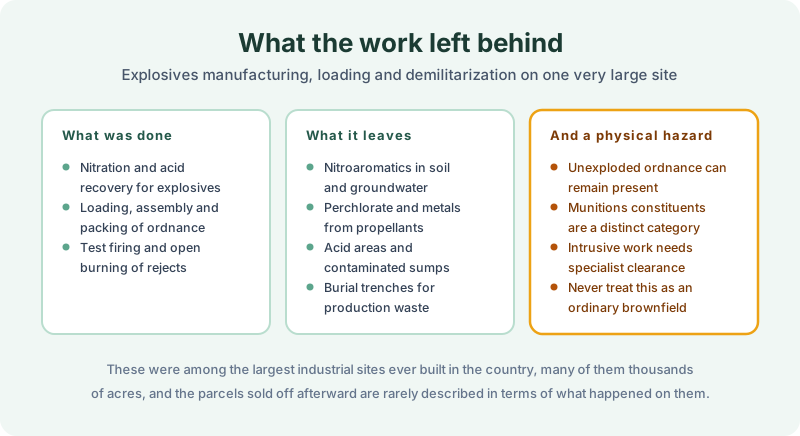
Three activities dominate. Nitration, producing explosives from acids and organic feedstock, with acid recovery plants alongside. Load, assemble and pack operations, filling and finishing the ordnance itself. And disposal, which in the relevant decades routinely meant open burning of off specification material and burial of production waste in trenches on site.
The residues follow from that. Nitroaromatic compounds in soil and groundwater are the signature finding. Perchlorate from propellants and pyrotechnics moves readily in water. Metals from primers, and heavily acidic ground around the nitration and recovery areas, are common. Where a plant ran for twenty years the pattern is rarely one plume. It is several distinct areas with different chemistry, separated by ground that was never used for anything, which is why a boring program built around a single contaminant answers very little.
One feature sets these sites apart from every other industrial legacy. Unexploded ordnance and munitions constituents can remain physically present, which makes intrusive work a safety question before it is an environmental one. Sites of this kind are not ordinary brownfields and nothing about the diligence should treat them as such.
What reaches the land record
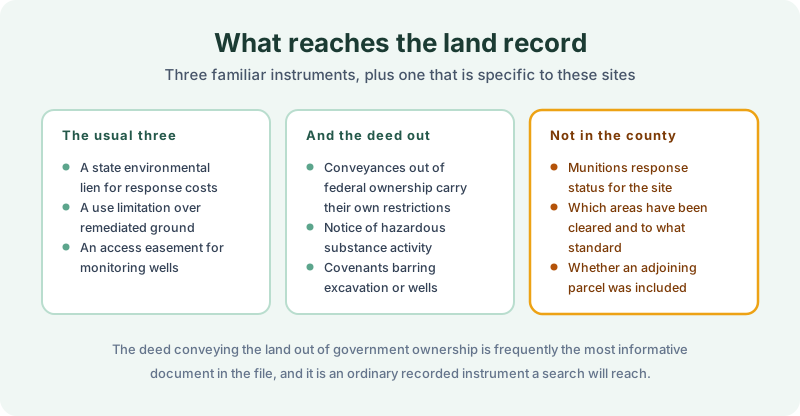
The three familiar instruments, first. A state environmental lien where public money has been spent recovering response costs. An activity and use limitation restricting excavation, groundwater use or construction over a remediated area. An access easement allowing an agency or its contractor onto the parcel to monitor.
Then one more that belongs to this category specifically. The deed conveying the land out of federal ownership frequently carries its own restrictions, along with a notice describing hazardous substance activity on the parcel and covenants barring excavation, wells or particular uses. That deed is an ordinary recorded instrument, a search will reach it, and it is regularly the single most informative document in the file. Later conveyances sometimes repeat the restrictions and sometimes do not, so the original is worth pulling rather than the most recent one.
What stays with the agencies is most of the substance. Whether a parcel sits inside a formerly used defense site or a munitions response area, which areas have been surveyed or cleared and to what standard, and whether adjoining ground was included in the same action are all agency records. That is the boundary of what recording captures rather than a shortfall in the search, and the same point in data gaps in an environmental lien search applies here with force.
Scoping the records work
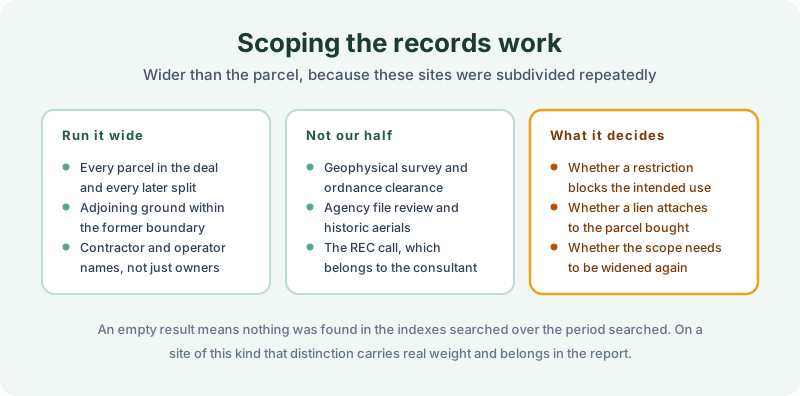
Run it wider than the transaction parcel. Every parcel in the deal and every later split, because these sites were subdivided repeatedly over seventy years and a burial trench can sit entirely within one of them. Adjoining ground inside the former boundary. And contractor and operator names as well as owner names, since the operating company was rarely the owner and an instrument may name them instead.
Run land title and judicial records from 1980 forward with the instruments attached in full. An index line reporting a restriction is not the restriction, and on a site where the whole question is which area is covered and what activity is barred, the recorded exhibit is the document that answers it.
Run it alongside the environmental professional rather than in place of them. Geophysical survey, ordnance clearance, agency file review and historic aerial work are theirs, and the REC call belongs to the consultant. The buyer’s own user responsibilities remain obligations no consultant discharges on their behalf.
Order early. A recorded covenant barring excavation ends a project that needs foundations or utilities, and knowing that in week one is worth far more than knowing it in week six. Recording practice is local, and an empty result means nothing was found in the indexes searched over the period searched rather than that nothing exists.
The 1980 Environmental Lien & AUL report is where that records work gets done. Certified title abstractors review land title and judicial records from 1980 to the present and document every environmental lien, encumbrance, and AUL found, with the recorded instruments attached. It’s $425, delivered by email in 3–5 business days. Order online, or read what an environmental lien means once one turns up first.
Get an E1527-21 compliant lien & AUL report
Our 1980 Environmental Lien & AUL reports are researched by certified title abstractors, cover judicial records, and are guaranteed accurate. Delivered in 3–5 business days.
or call 877-848-5337