
Published
A municipal training ground reads as harmless on a site walk. A concrete pad, a steel mockup, maybe a burned out fuselage in the weeds, and no tank farm or process building anywhere in sight. What happened there was deliberate and repetitive. Crews set fuel alight and knocked it down with aqueous film forming foam, weekly, for decades, onto ground that was usually unlined. The contaminant class involved is the one described in our note on PFAS restrictions in the land record, and it behaves in the record differently from the solvents and metals most due diligence is built around.
What a training ground leaves
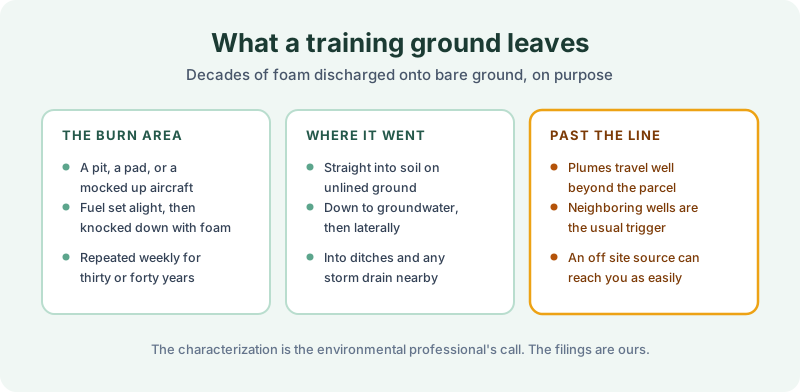
The burn area is the obvious feature. A pit, a pad, or a mocked up aircraft or tank, used to create a fire so that crews could practice putting it out. The fuel was frequently whatever was available, which on an airfield or a refinery meant jet fuel or crude.
The foam is the reason this site type matters now. Firefighting foams containing per and polyfluoroalkyl substances were the standard for hydrocarbon fires from the 1970s onward. Discharged onto bare ground, the compounds move readily into soil and then into groundwater, and they are notably persistent.
The plume does not stop at the property line. That is the practical consequence for a buyer, and it runs in both directions. A training ground can be the source of a condition affecting neighbors, and a perfectly ordinary parcel can be affected by a training ground a mile away that nobody on the deal has thought about. Whether any of this amounts to a recognized environmental condition is a determination for the environmental professional. The record question is narrower, which is whether anybody filed anything.
What may reach the land record
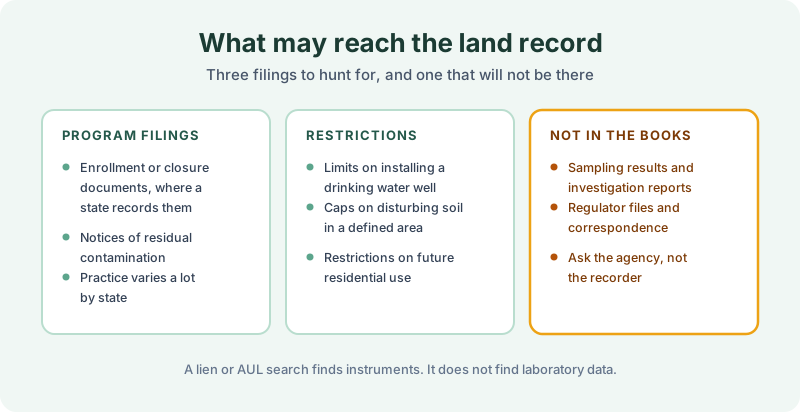
Three categories are worth hunting for. Program filings appear where a state records enrollment, a notice of residual contamination, or a closure document in the county books. Practice is uneven, and several states record nothing at all.
Recorded restrictions are the most consequential category on this site type, and the usual form is specific. A prohibition on installing a drinking water well, a limit on disturbing soil within a mapped area, or a bar on residential use. Those are the instruments covered in our note on environmental covenants and UECA, and on a PFAS site the well restriction is frequently the operative one, as described in our note on groundwater use restrictions.
Cost recovery liens secure public money already spent. They may run against the parcel, against the operator, or against both.
What will not be in the land records is the technical material. Sampling results, investigation reports, and regulator correspondence sit in agency files, and several states track institutional controls in a database rather than in the county books, which is why our note on institutional control registries treats the registry and the recorder as two separate searches.
Scoping the search
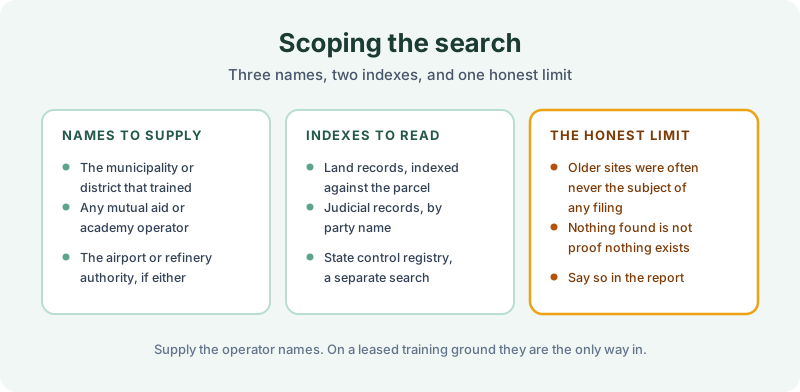
The structural difficulty is the same one a shooting range presents. A training ground is often operated by a fire district, a mutual aid group, or a regional academy on land owned by somebody else, so the entity that discharged the foam never appears as grantor or grantee. An enforcement action or judgment against that entity sits in a court index organized by party name, which is the dependency our note on judicial records describes, and the same landowner side relationship appears in our note on leased property. A district or academy name supplied by the client is often the single most useful input.
Timing works in favor of a 1980 forward search here. Most of these facilities were closed or relocated from the late 1990s onward, and the regulatory attention that produced any filings at all arrived later still, which puts nearly all of the relevant activity inside the term. The FAQ covers how thin or unindexed counties are handled, and a sample report shows the format findings arrive in.
Read the result honestly. A search reports what was recorded and indexed over the term searched, and a great many training grounds were never the subject of any filing, so nothing found is not proof that nothing exists.
The 1980 Environmental Lien & AUL report is the record half of this work. Certified title abstractors review land title and judicial records from 1980 to the present and document every environmental lien, encumbrance, and AUL found, with the recorded instruments attached. It is $425, delivered by email in 3–5 business days. Order online, or start with our note on what an AUL actually requires if a restriction has already surfaced.
Get an E1527-21 compliant lien & AUL report
Our 1980 Environmental Lien & AUL reports are researched by certified title abstractors, cover judicial records, and are guaranteed accurate. Delivered in 3–5 business days.
or call 877-848-5337